
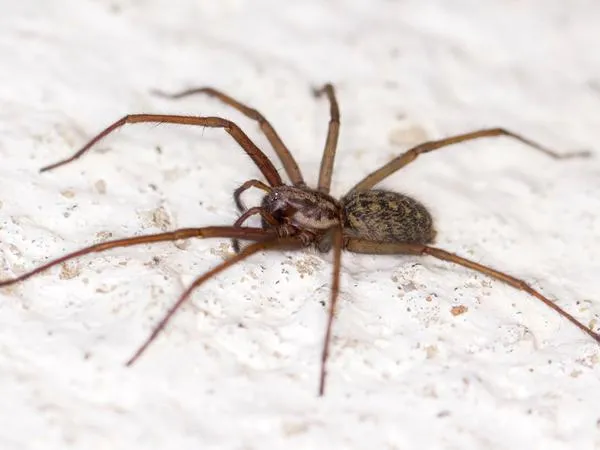
Female common house spiders deposit as many as 250 eggs into a sack of silk. These sacs are often brown in color and are flask-like in shape. Females produce up to 17 of these sacs during a lifetime, resulting in more than 4,000 eggs. Within a week, spiderlings hatch and begin to undergo a series of instars.
The first instar takes place inside the egg sac. Spiderlings in the first instar do not nourish themselves while those in the second instar consume premature eggs.
After hatching, air currents disperse surviving spiderlings on threads of silk. This process, known as ballooning, allows spiders to populate habitats far from their origin. Adult spiders may survive for more than a year.









 4.7 Stars From 3,933+ Reviews